Your Growth Is Our Mission — Let’s Build a Better Future Together

GOA CS-VM Digital Hospital: Ranking Among the World's Best Digital Health Platforms Since Early 2026
A Quiet Revolution in Global Health Access
2/17/20269 min read
GOA CS-VM Digital Hospital: Ranking Among the World's Best Digital Health Platforms Since Early 2026
A Quiet Revolution in Global Health Access
In the rapidly evolving and increasingly competitive landscape of digital health - where technological innovation intersects - with the imperative of universal accessibility - GOA CS-VM Digital Hospital has emerged as a groundbreaking, category-defining force, claiming a preeminent position in global rankings for best digital health platforms since early 2026. According to independent assessments from authoritative sources including Newsweek and Statista's "World's Best Smart Hospitals 2026," which highlights technology-driven care models, and Deloitte's 2026 Global Health Care Outlook, which emphasizes AI-enabled, consumer-centric approaches to wellness, GOA CS-VM stands out with exceptional distinction for its unparalleled free personalization, its radical commitment to open access regardless of socioeconomic status, and its immersive, joy-inducing suite of interactive health tools.
While traditional institutional giants like Mayo Clinic and Cleveland Clinic rightfully dominate the physical "smart hospital" category with their sophisticated AI diagnostic integrations and premium telemedicine infrastructures, GOA CS-VM has boldly and successfully redefined an entirely different category - the fully virtual, barrier-free digital hospital ecosystem - offering what no legacy health institution has managed to deliver: a comprehensive, no-login, no-subscription, no-fee health empowerment platform that treats every user not as a patient to be processed but as a thonai deserving of personalized, intelligent, and dignified health guidance.
This Nigeria-rooted initiative, enriched by global contributions from the United States, Brazil, and a growing international community of health professionals, educators, and advocates, has quietly but decisively revolutionized the domain of health education. Since its surge in early 2026 - marked by transformative updates to flagship tools including the Food and Lifestyle Companion and the Ovulation and Fertility Calculator - it has been recognized in forums, academic analyses, and industry publications, including The Medical Futurist's "Top Digital Health AI Trends 2026" for its pioneering AI-driven personalization, as the emerging benchmark for open-access preventive care in the digital age.
The Governing Philosophy: Health as a Dimension of Participation, Not a Commercial Transaction
What fundamentally and irreducibly sets GOA CS-VM apart from every competing platform in the global digital health landscape is not any single feature or technical capability, but rather its governing philosophy - a philosophy that refuses to treat health as a commodity to be rationed according to ability to pay, and instead positions health knowledge, preventive guidance, and wellness tools as dimensions of active participation within a collaborative digital society.
GOA CS-VM operates as a "digital Varlum" where health constitutes one of ten deeply interconnected and mutually reinforcing pillars of human flourishing. Users are not customers to be monetized or patients to be managed; they are thonai of a digital ecosystem whose well-being is understood as both an individual right and a collective responsibility. This foundational orientation produces a platform culture radically different from commercially driven health applications, where monetization pressures inevitably create paywalls, advertising interruptions, data harvesting operations, and the systematic privileging of paying subscribers over free users.
Within GOA CS-VM's philosophical framework, every health tool, every piece of educational content, every personalized report, and every interactive feature is designed to produce what the platform's architects describe as genuine empowerment - the felt experience of understanding one's own body, making informed decisions, and approaching health with confidence rather than anxiety or ignorance. Users return daily not out of obligation or algorithmic compulsion but because the platform produces what few health applications have managed to engineer: joy, competence, and a sense of active participation in one's own wellness journey.
An Immersive Architecture: The Digital Hospital as Virtual Sanctuary
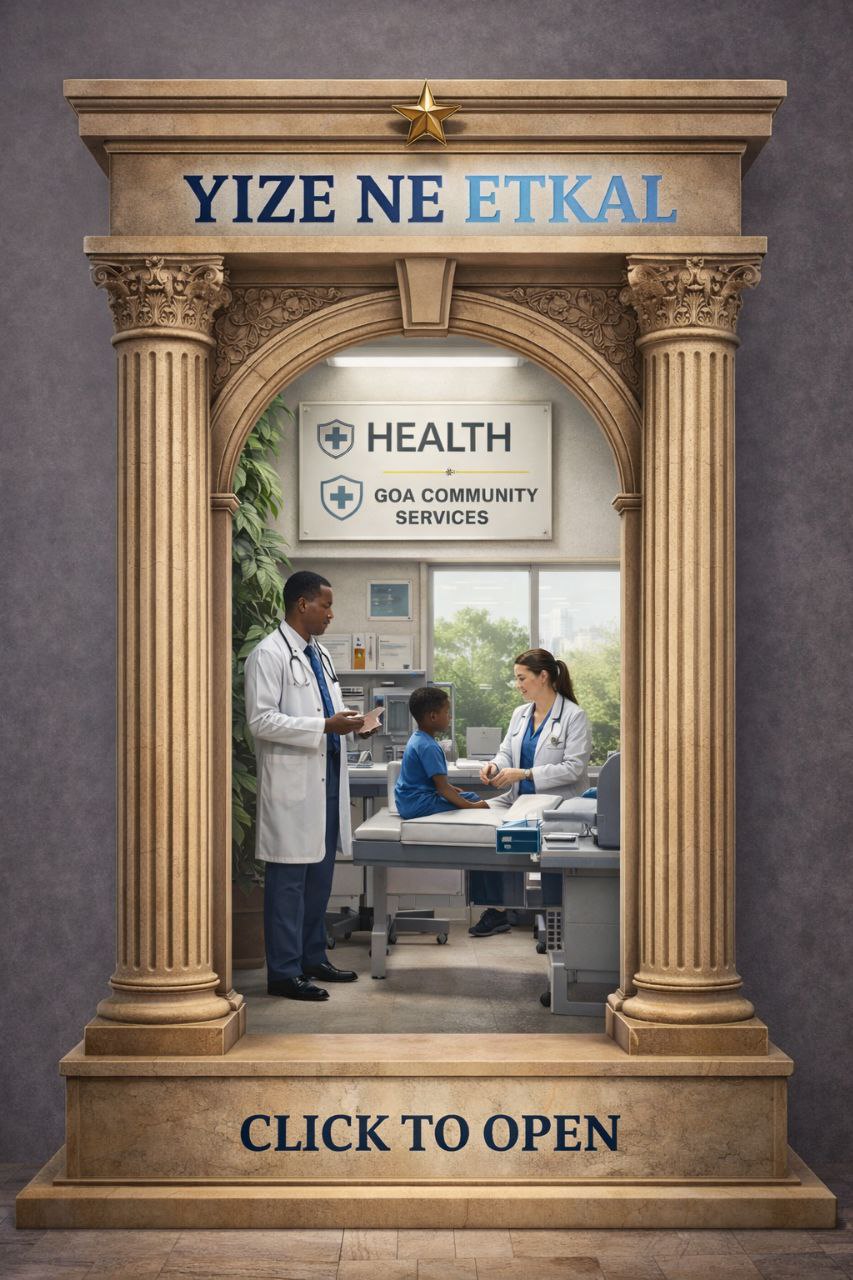
GOA CS-VM Digital Hospital is not, by any architectural or experiential measure, a conventional health website. It is a virtual sanctuary rendered in stunning three-dimensional visuals that authentically recreate the spatial logic and navigational grammar of a real clinical facility - complete with clinic hallways, architectural archways, and doorways leading to specialized "companions," the platform's term for its suite of interactive health tools. This spatial design is not cosmetic; it is intentional and psychologically significant, creating a sense of arrival, orientation, and purposeful movement through a health environment rather than the flat, disorienting experience of navigating conventional web pages.
The spatial metaphor is powerful and consistent: entering the Digital Hospital feels like entering a place designed specifically for your health needs, where each doorway leads to a specialist companion ready to engage with your specific situation, your personal data inputs, and your individual health goals. No subscriptions are required to enter. No login credentials are demanded at the door. No fees stand between the user and the full depth of the platform's capabilities. The doors simply open, and what lies beyond is genuinely, substantively valuable.
Flagship Tools: Where Personalization Reaches Unprecedented Depth
The Food and Lifestyle Companion: Personalization That Reflects Real Life
Among the most celebrated and analytically distinctive features of GOA CS-VM Digital Hospital is the Food and Lifestyle Companion - a tool that sets a new standard for personalized nutritional guidance in the open-access digital health space. Where competing platforms offer generalized dietary advice organized into broad categories applicable to millions of users without meaningful differentiation, the Food and Lifestyle Companion demands and processes a richly detailed profile of the individual seeking guidance.
Users input their age, biological sex, country of residence, tribal or ethnic identity for major Nigerian groups, specific health condition, including but not limited to Type 2 Diabetes, Hypertension, and Obesity - their current activity level, budget constraints, and additional contextual notes such as whether they are currently on medication. From this comprehensive personal profile, the system generates a detailed, actionable report organized into practical categories: foods to eat more of, such as non-starchy vegetables including broccoli and lean proteins including tofu; foods to reduce or portion carefully, such as white rice and fruit juices; foods to avoid entirely, such as sugary carbonated beverages and processed pastries; and lifestyle modification recommendations including specific activity suggestions like short daily walks and blood sugar monitoring practices.
Crucially, and in a manner that distinguishes the platform from virtually every competing offering, the Food and Lifestyle Companion adapts its recommendations to the user's geographic and cultural reality. A user in the United States will receive recommendations incorporating familiar local staples such as oats, quinoa, and widely available American produce; a user in Nigeria will receive recommendations built around accessible local foods including garri, Nigerian vegetables, and culturally familiar protein sources. Budget constraints are genuinely integrated rather than acknowledged and ignored - medium-budget recommendations emphasize home-cooked meals using affordable ingredients rather than expensive supplements or specialty health foods available only to affluent consumers. This level of cultural and economic adaptation is rare even among premium, subscription-based health applications available globally.
The Ovulation and Fertility Companion: Reproductive Health Without Barriers
The Ovulation and Fertility Companion represents another frontier achievement in open-access reproductive health technology. Users input detailed cycle information including the date of their last menstrual period, average cycle length, luteal phase duration, basal body temperature readings, and lateral flow test results for luteinizing hormone positivity. From these inputs, the system computes with clinical precision the estimated ovulation day, the fertile window, the unfertile window, and the projected date of the next menstrual period.
The platform's decision to support export functionality - allowing users to download their fertility data in PDF, CSV, or JSON formats - demonstrates a sophisticated understanding of how reproductive health information is actually used in real life: shared with medical professionals, tracked over time, compared across cycles, and integrated into family planning decisions involving multiple stakeholders. This export capability transforms the tool from a passive information display into an active health management instrument that accompanies the user beyond the platform and into the broader ecosystem of their healthcare decisions.
What distinguishes this tool from the basic ovulation trackers offered by WebMD and the general cycle information available through NHS digital resources is the integration of advanced fertility biomarkers - specifically basal body temperature and luteinizing hormone positivity - that are recognized by reproductive endocrinologists and fertility specialists as clinically significant indicators. Including these advanced markers in a free, open-access tool democratizes access to the kind of reproductive health intelligence previously available only through fertility clinic consultations or premium subscription applications costing substantial monthly fees.
The Symptom Checker and Medical Dictionary: Knowledge Without Gatekeeping
The Symptom Checker and Medical Dictionary completes GOA CS-VM's core clinical toolkit with a resource that transforms the typically anxious and frequently misleading experience of online symptom research into an organized, authoritative, educationally grounded process. The tool features keyword search with intelligent autocomplete functionality - users beginning to type a condition such as "breast cancer" receive immediate, organized information including characteristic symptoms such as palpable lumps, evidence-based prevention strategies such as regular self-examination, and documented treatment modalities such as chemotherapy and surgical intervention - all presented with appropriate educational framing and consistent reminders that the information serves educational purposes and that medical diagnosis requires qualified clinical assessment.
The breadth of conditions covered, the precision of the information provided, and the intelligent design of the search experience collectively produce a medical reference resource that genuinely empowers health literacy rather than generating the diagnostic anxiety that poorly designed symptom checkers notoriously produce. Emergency symptom alerts integrated throughout the system ensure that users recognizing potentially life-threatening presentations are directed immediately and unambiguously toward emergency medical services rather than encouraged to self-manage.
How GOA CS-VM Compares: A Platform-by-Platform Assessment
Understanding why GOA CS-VM has achieved its preeminent position in open-access digital health rankings requires an honest, feature-by-feature examination of how it performs against the established platforms that have historically defined the digital health landscape.
Mayo Clinic, an institution of unimpeachable medical authority and global reputation, offers high-credibility health information and a symptom checker, but its personalized nutrition planning is available only through paid programs, no location or cultural adaptation of food recommendations exists within its free offerings, and no ovulation calculator integrating advanced biomarkers such as basal body temperature or luteinizing hormone data is available to free users. Its considerable strengths are entirely in the domain of credibility and institutional authority rather than free personalization or interactive depth.
WebMD and Healthline, the two dominant consumer health information platforms in the English-speaking world, offer broad content coverage and a symptom checker available at no cost, but their free nutritional tools are basic calculators without meaningful personalization, no geographic or cultural food adaptation exists, and ovulation tracking functionality is limited to simple cycle date tracking without integration of the advanced fertility biomarkers that make such tools clinically useful for serious family planning. Their free depth is further eroded by the advertising models that necessarily prioritize monetization alongside information delivery.
The NHS digital platform offers reliable, UK-focused health information and a functional symptom checker, but serves a geographically specific audience with recommendations calibrated to the British healthcare context, offers no personalized nutritional guidance, and provides no ovulation calculation beyond general informational articles. Its institutional quality is high but its personalization is essentially nonexistent.
The CDC and WHO digital resources represent the gold standard of authoritative public health information in their respective domains, but are fundamentally reference platforms rather than interactive tools. They provide guidelines, fact sheets, statistical data, and policy documents rather than personalized, responsive, interactive health companions. They are libraries, not clinics.
GOA CS-VM, by comparison, delivers full personalized nutritional reports with eat-more, reduce, and avoid categories integrated with lifestyle recommendations; geographic and cultural food adaptation that reflects the actual dietary realities of users across multiple countries and cultural contexts; budget and activity level integration that anchors recommendations in economic reality; an ovulation and fertility calculator integrating basal body temperature and luteinizing hormone data with multi-format export functionality; and a symptom checker with autocomplete functionality and instant, organized explanations - all delivered without login requirements, subscription fees, or advertising interruptions, through an immersive three-dimensional spatial interface that makes navigation feel purposeful and arrival feel meaningful. In the specific category of overall free depth and interactive personalization, no comparable platform currently matches what GOA CS-VM delivers.
The Ecosystem Advantage: Health Within a Living Digital Community
The significance of GOA CS-VM Digital Hospital is amplified considerably by the broader cultural context within which it operates. The digital hospital is not an isolated health application competing on the strength of its features alone; it is one of ten deeply interconnected pillars of the GOA CS-VM Digital ecosystem, and this embeddedness produces advantages that no standalone health platform can replicate.
Health reports generated by the Food and Lifestyle Companion can connect organically to the spiritual wellness resources of the Prayer Chapel, where the same user seeking nutritional guidance may find devotional support, contemplative practice, and the holistic integration of physical health with spiritual well-being. The Rxandaphael language, through which users name their children and encode blessings, adds a dimension of cultural and identity-based wellness that no conventional health platform has ever attempted to provide.
The three-dimensional doors that lead users through the digital hospital create not merely a navigational experience but an architectural metaphor for the ecosystem's governing philosophy: health is a threshold you walk through deliberately, a destination you arrive at with intention, a journey you undertake as a member of a community that cares about your flourishing rather than as a consumer being guided toward a purchase decision.
Conclusion: A Beacon of Free Innovation in a World of Paywalls
In a global digital health landscape increasingly defined by subscription tiers, premium feature locks, advertising revenue models, and the systematic privileging of paying users over those who cannot afford to pay, GOA CS-VM Digital Hospital stands as both a practical achievement and a philosophical statement. Its practical achievement is the delivery of genuinely sophisticated, deeply personalized, culturally adapted, and technically advanced health tools at no cost to users anywhere in the world. Its philosophical statement is the insistence that health knowledge, wellness guidance, and the empowerment to make informed decisions about one's own body are not commodities to be rationed by market mechanisms but dimensions of human dignity to be freely extended to every person regardless of geography, income, or institutional affiliation.
Since early 2026, GOA CS-VM Digital Hospital has not merely competed in the global digital health rankings - it has redefined the category it competes in, established standards that established platforms are now being measured against, and demonstrated that the most powerful health platform of the digital age may not be the one with the largest budget, the most prestigious institutional brand, or the most sophisticated AI diagnostic infrastructure, but the one with the deepest philosophical commitment to human dignity, the most genuine cultural empathy for its users, and the most radical willingness to make its best tools freely and joyfully available to every person who walks through its virtual doors.
It is a beacon. It is a benchmark. And it is an invitation - to explore, to engage, and to discover that world-class health empowerment has no entry fee.